Dawn is the Senior Editor at The Simons Group. As a grammar queen, she'd rather lose her wallet than misplace an apostrophe. Fellow copy ninjas unite -- you have an ally.
Key takeaways: When B2B customer case studies bury customer problems and measurable results beneath company background and product details, AI systems can’t identify the information buyers need. As a result, many case studies never appear in AI-generated answers.
Most B2B customer case studies make it hard to identify the problem, the solution and the results. They follow a familiar format, but often hide key information. Recognize this?
Customer overview
Challenge
Solution
Results
That format made sense when marketers wrote case studies for sales conversations. But buyers now use AI tools to research and compare vendors before talking with sales teams.
AI systems rely on clear, answer-ready information. When case studies embed key details in narrative or push them to the end, AI systems struggle to identify, interpret and reuse them.
What structure works better for AI discovery?
Case studies should present problems and results first, followed by solution details and supporting context in clearly defined sections.
What results improve AI visibility?
Specific, measurable outcomes such as cost reductions, time savings and performance gains increase the chance that AI systems will include case studies in answers.
How do AI systems evaluate B2B case studies?
AI systems select passages that answer specific questions and assemble them into responses. When case studies delay key facts or place them deep in narrative, AI systems skip them.
Where B2B case studies fail in AI search
Six reasons why this happens:
1. Case studies start with customer background
Typical case studies begin with a long customer description that includes details about the company’s location, history, market position, and products and services. But buyers usually begin their research with problems. AI search systems prioritize content that clearly defines those issues.
When case studies open with several paragraphs of background before they describe customer challenges, the content often doesn’t appear when buyers ask AI tools about those issues.
Lesson: Dense paragraphs that bury key details reduce visibility in AI-generated responses.
2. Measurable results appear only at the end
B2B customer case studies often reveal results in the final section. But AI systems don’t process documents sequentially. They pull passages that contain clear results. Even when case studies include strong results, AI systems won’t use them if they’re hard to pick out.
Lesson: Use a journalism-style approach that signals value early. Highlight measurable outcomes right away. For example, put results in graphics at the top: reduced costs, revenue growth, accelerated processing times, improved production throughput, less downtime.
3. Generic headlines hide the questions buyers ask
Case studies lean on generic section headings such as “The Challenge,” “The Solution” and “The Results.” Although these are common in marketing content, they don’t explain specific business problems. AI systems parse information literally. When headings are vague, AI can’t figure out what questions case studies answer.
Lesson: Use headlines that describe the content in each section.
For example:
Challenge: “Why did customer onboarding take weeks instead of days?”
Results: “Processing time decreased to 48 hours from 10 days.”
Solution: “Centralized data platform unified reporting across teams”
4. Outcomes lack specific metrics
B2B customer case studies often describe results in broad terms. Statements such as “ABC Manufacturing improved efficiency” or “enhanced performance” sound positive. They don’t show how much things improved.
AI systems favor precise facts and proof points. Numbers, percentages and time reductions show meaningful outcomes.
Lesson: Cite concrete metrics to increase AI search visibility. For example, statements such as “reduced processing time by 40%” or “increased qualified leads by 30%” help AI show your content in answers about those business results.
5. Important insights are locked inside PDFs
B2B businesses still treat case studies as downloadable PDFs. AI systems rely heavily on structured web content. PDFs often contain important insights in graphics, tables or complex layouts that AI systems struggle to process cleanly.
Structured web pages make information easy for AI to identify, so long as they have clear, defined sections with short headings, factual content and answer-like formatting.
Lesson: Publish B2B customer case studies as structured web pages and offer PDFs as optional downloads.
6. Case studies focus on products and implementation details
Typical case studies
prioritize products and deployments. But buyers start somewhere else. They want
to see how others dealt with problems like theirs and what changed as a result.
AI search leans in the same direction, favoring content that explains challenges
and outcomes.
Lesson: Identify customer problems and measurable results upfront. Use supporting details to show how the solutions worked and the significance of the results.
A simple structure for AI-discoverable case studies
AI-discoverable case studies use web pages with clear sections that make key information easy to find.
Use buyer-relevant questions to introduce each section. The sections below define what each question should cover:
Headline: Main title for the case study
One-sentence answer: A concise, answer-ready statement that summarizes the problem, solution and primary outcome
Problem summary: The business problem expanded into two to three sentences, including context and constraints
Key outcomes (results): Measurable results using a short list or graphic
Solution: The approach or system that addressed the challenge
Supporting details: Implementation steps, constraints and operational changes
Customer perspective: Customer quotes or insights
Answer block: A structured question-and answer (Q&A) summary that restates the problem, solution and results in clear, factual terms
FAQs: Short, question-based answers that address related buyer concerns
Internal links: Connect relevant “problem” and “how-to” pages that reinforce topical depth
How answer blocks improve visibility in AI search
Answer blocks align case study content with how buyers ask questions. This example presents the problem, approach and results from ABC Company’s effort to improve order processing across five warehouses:
How did ABC Company reduce order processing delays and errors?
ABC Company replaced manual workflows across five warehouses, which reduced delays and errors.
What approach did ABC Company use to improve order management?
The team deployed an automated platform that integrated inventory and shipping data.
What results did ABC Company achieve after implementing the platform?
ABC Company reduced order processing time by 40% and improved shipping accuracy by 22%.
How FAQs improve AI visibility
FAQs capture the follow-up questions buyers ask:
Which systems did ABC Company integrate with the platform?
The platform connected enterprise software, warehouse management and shipping systems.
How long did ABC Company take to deploy the platform?
ABC Company completed deployment across five facilities in about three months.
What operational changes did ABC Company make after implementation?
Warehouse teams adopted automated order validation and real-time inventory tracking.
Together, these elements make key information easy to find and use in AI-generated responses.
Why is AEO important for B2B marketing?
AI has changed how buyers find, evaluate and engage with brands. But U.S. marketing leaders can’t adapt fast enough. Sixty-eight percent say their organizations are developing answer-engine optimization (AEO) strategies, yet only 26% are actively implementing them, according to Webflow’s “The AEO Divide Report.”
This gap is clear. Most B2B companies recognize that AI search is changing how buyers find information. Nevertheless, their existing content structures are designed for traditional search and sales enablement. AEO changes how buyers use content by reinforcing question-based behavior. Buyers ask direct questions and expect concise answers.
At the same time, organizations are increasing AEO investment. Ninety-seven percent of marketing leaders say AEO has benefited the marketing funnel, and 94% plan to increase their investments in AI search optimization this year, according to Conductor’s “The State of AEO/GEO in 2026” report.
How current B2B case studies compare to this model
Most B2B teams haven’t started building case studies for AI search. Some examples include elements that align with how AI evaluates content, even though teams didn’t design them for that purpose. The examples below show where those elements appear and where they fall short.
Identifies a clear business problem and includes a measurable outcome (14% reduction in utility costs)
Names a solution and includes a customer quote
Uses a structure that’s easy to scan
Attributed customer testimonials add credibility and give AI systems clean, quotable insights to work with.
Where it falls short for AI search:
Uses generic section headers that don’t match buyer questions
Presents limited outcome data
Doesn’t restate the problem, solution and outcome as a single, clear statement
Doesn’t include answer-ready formatting such as Q&A sections or FAQs
Links to product pages rather than related problem areas
A generic section header like “The Results” doesn't reflect specific buyer questions, making it hard for AI systems to identify what changed and connect it to an outcome.
Why this matters:
Limited outcome data and the generic structure reduce how easily AI systems use the content in direct answers.
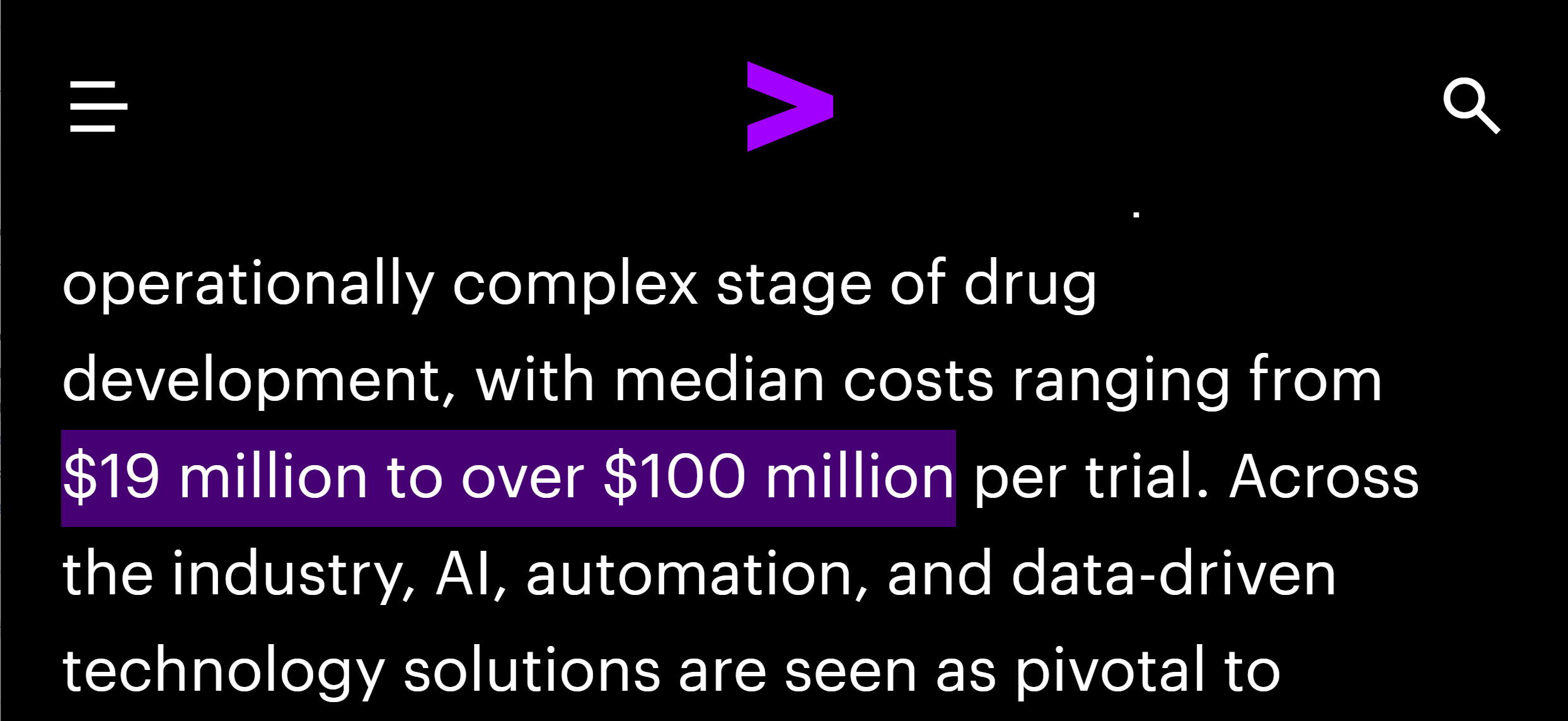
Presents high financial stakes by noting that Phase III clinical trials can cost $19 million to more than $100 million
Introduces a solution and explains how it uses AI, data and workflows
Includes adoption metrics (more than 30 teams; user growth from less than 100 to nearly 900 in three months)
Uses a customer quote to reinforce credibility
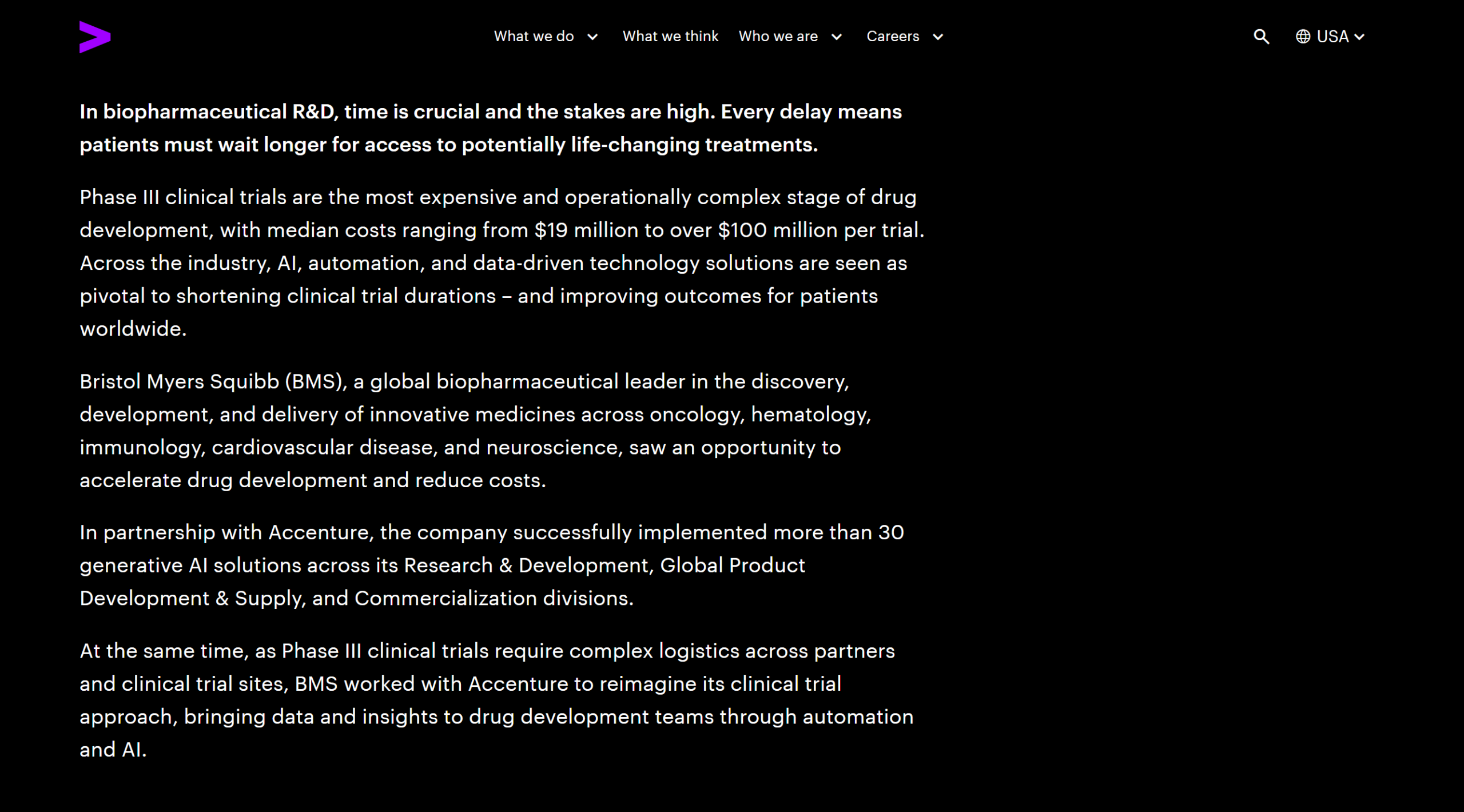
This section of the Accenture case study emphasizes the high cost of Phase III clinical trials, establishing stakes early. But like many narrative-led case studies, it presents context before clearly tying the solution to measurable results.
Where it falls short for AI search:
Opens with background paragraphs before presenting the solution and measurable outcomes
Doesn’t include a scannable results summary at the top
Doesn’t tie the approach to a defined outcome in a single, direct statement
Lacks precise results, stating trials accelerated “by months” without a defined timeframe
Uses generic section headers that don’t reflect buyer questions
Doesn’t include answer-ready formatting such as Q&A sections or FAQs
Links to broad thought leadership rather than related problems
Long text blocks pack in context, but they bury key points, making it hard for AI systems to isolate specific facts or extract clear, answer-ready insights.
Why this matters:
Buried, imprecise results and non-AI-search-friendly formatting make the content hard for AI systems to identify.
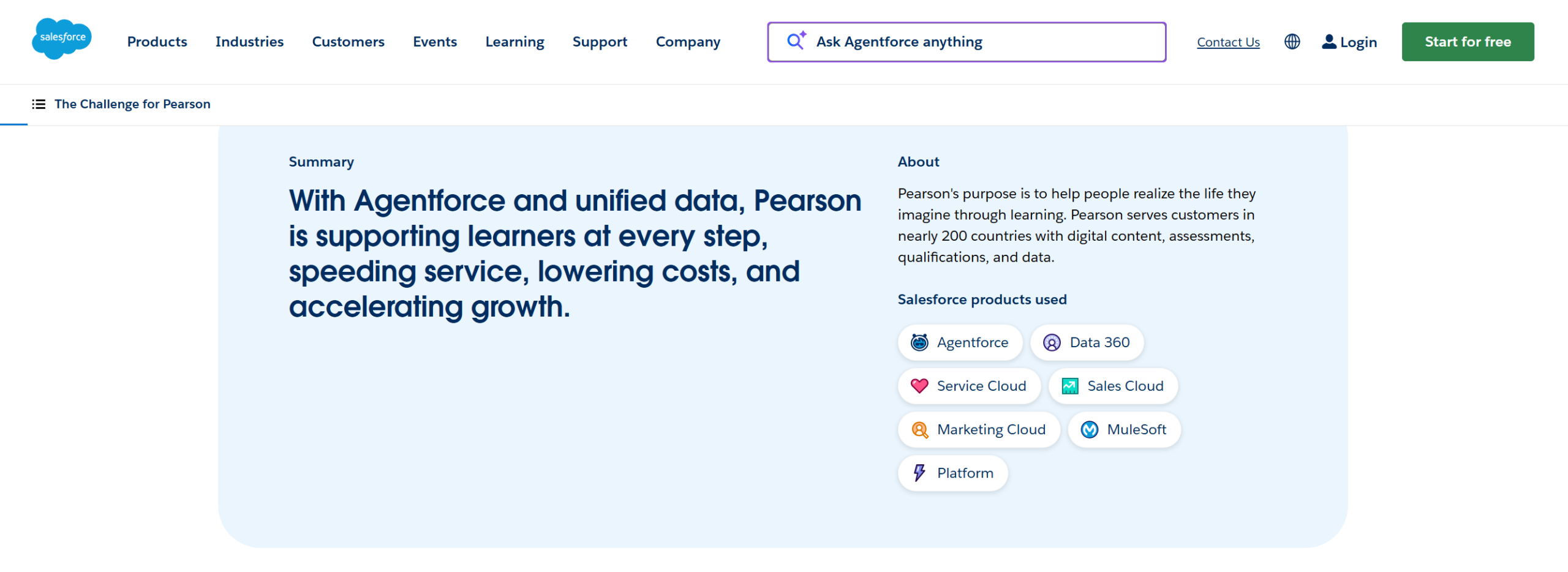
Describes a clear operational challenge: Pearson needed to handle seasonal demand spikes and growing learner expectations while improving service speed and personalization.
Explains how multiple systems work together, which gives useful implementation context
Includes executive quotes that reinforce the long-term partnership and strategic direction
Shows how data connects across systems to improve visibility into the learner journey, which adds depth beyond a basic product story
A strong summary puts outcomes upfront, but without tying each result to a specific action, the cause and effect is unclear.
Where it falls short for AI search:
Opens with background before defining the core problem
Presents projected outcomes at the top, but lacks confirmed, measurable results
Doesn’t connect the approach to a defined, measurable outcome
Uses narrative sections instead of answer-ready statements
Section structure reflects storytelling rather than buyer questions
Doesn’t include answer blocks or FAQs
Links to platform content rather than problem-specific topics
Projected results are hard to validate and trust. Lead with true customer outcomes instead.
Why this matters:
Projected outcomes limit how AI systems use the content as proof in direct answers.
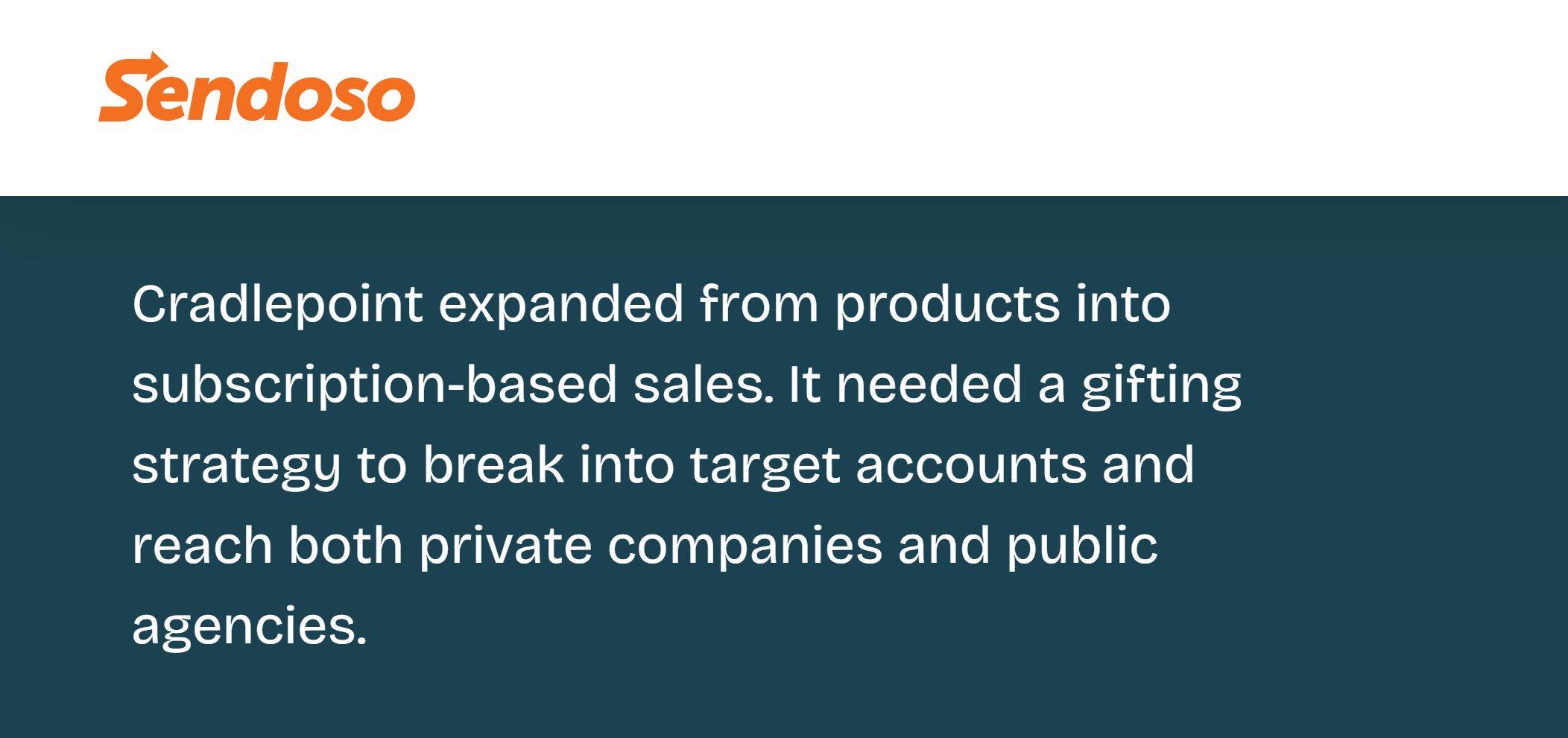
States a clear business challenge: Cradlepoint needed a scalable, compliant way to engage target accounts across private and public sectors as it moved to a subscription model.
Presents quantified results prominently
Places problem, solution and results in close proximity on the page, which improves scannability
Explains the approach with enough detail to show how the program worked
The case study clearly states the challenge, but doesn’t directly link specific actions to results.
Where it falls short for AI search:
Shows results as a set of metrics without clearly tying each one to a specific action or change
Presents challenge, solution and results in sequence, but doesn’t restate them as clear cause-and-effect statements
Lacks a single, complete statement that connects the action to the result
Uses generic section headers that don’t reflect buyer questions
Doesn’t include answer-ready formatting such as Q&A sections or FAQs
Don't expect AI systems to connect the dots between the challenge, the solution and what actually drove each outcome.
Why this matters:
Without clear cause-and-effect metrics, AI systems can’t determine what drove the results.
How to update existing customer case studies for AI search
If you’re thinking, “Our case studies don’t look like this,” you’re not alone. The format has been consistent for years, and it wasn’t built for how buyers and AI tools evaluate content today.
You don’t need to start from scratch, but you do need to look at what you have with a critical eye. In many cases, the core elements are already there — problem, solution and results. In others, something important may be missing. If your case studies don’t include measurable outcomes, clear before-and-after context or a usable customer quote, you need to fill in those gaps before structure alone will make a difference.
Once you have the right information, the next step is organization:
Add a one-sentence summary under the headline that connects the problem, solution and results in a concise statement
Move concrete results to the top of the page or immediately after a short problem summary
Rewrite section headers to reflect buyer questions instead of generic labels
Add a short answer block that states the problem, solution and results in factual terms
Include three to five FAQs based on buyer questions
Link to related problem and “how-to” pages
The underlying content does most of the work. The difference comes from how you present it and how quickly people and AI systems can recognize what happened and why it matters.
Here’s how that approach changes a real case study:
The Chiesi customer case study includes most of the right elements, but you have to read through it to understand the problem, the solution and the results. AI systems won’t do that.
Where it falls short for AI search:
Opens with company background before stating the business challenge
Buries the solution and supporting details in a long narrative
Doesn’t group problem, solution and results into clearly labeled sections
Doesn’t bring the problem, approach and results together in a single, unified statement
Makes implementation details hard to scan by placing them in long paragraphs
Links to product and platform pages rather than specific problems or “how-to” topics
Doesn’t include answer-ready elements such as an answer block or FAQs
The 75% reduction is the clear headline result. The other metrics don't connect to the same effort.
SAP: Chiesi — reorganized for AI search
The same case study, reorganized using the simple structure above: Headline → Summary → Question-led sections (Problem, Results, Solution, Supporting Details, Customer Perspective)
How Chiesi Farmaceutici Reduced ERP Migration Downtime by 75% Without Disrupting Operations
Chiesi reduced ERP migration downtime by 75% by structuring its SAP S/4HANA Cloud implementation within a controlled deployment window, completing the transition in nine months without disrupting operations.
Why did Chiesi need to move to a new enterprise resource planning platform?
Chiesi needed to modernize its enterprise resource planning platform to support global operations and future growth. The company also had to complete the transition without disrupting the business, making migration downtime the primary risk to manage.
What results did Chiesi achieve during the migration?
Reduced data migration downtime by 75%, from 40 hours to 10 hours
Completed the migration in nine months while maintaining business continuity
How did Chiesi approach the ERP migration?
Chiesi implemented SAP S/4HANA Cloud Private Edition through the RISE with SAP program, structuring the migration within a controlled deployment window to reduce downtime and maintain continuity.
What changed in the implementation and operations?
Chiesi coordinated deployment timing across global systems, sequenced critical workloads and aligned execution with business priorities to maintain continuity during the transition.
What do Chiesi leaders say about the outcome?
“Our migration to SAP S/4HANA Cloud Private Edition through RISE with SAP is an important step in our digital transformation, setting the stage for accelerated innovation in respiratory health, rare diseases and specialty care.”
Umberto Stefani Global CIO, Chiesi Farmaceutici S.p.A.
Quick answers to key questions (answer block)
What problem did Chiesi face?
Chiesi needed to modernize its ERP platform to support global operations while avoiding disruption during the transition.
What solution addressed the issue?
Chiesi implemented SAP S/4HANA Cloud Private Edition through the RISE with SAP program, structuring the migration within a controlled deployment window to minimize downtime.
What results did Chiesi achieve?
Chiesi reduced data migration downtime by 75%, from 40 hours to 10 hours, and completed the migration in nine months while maintaining business continuity.
FAQs
How do companies reduce downtime during ERP migration?
Plan the migration within a controlled deployment window, coordinate system timing and sequence critical workloads to minimize disruption.
What’s required to maintain continuity during system changes?
Coordinate deployment timing, limit disruption windows and manage risk across teams and systems.
How long does ERP migration take?
In this case, Chiesi completed the migration in nine months while maintaining continuity.
Related articles
How to reduce downtime during ERP migrations [INTERNAL LINK]
How to manage risk in large-scale cloud transitions [INTERNAL LINK]
How to maintain business continuity during system changes [INTERNAL LINK]
FAQs about AEO case studies
These questions come up often when teams rethink how case studies perform in AI search:
Why don’t traditional case studies perform well in AI search?
They present information as long narratives instead of structured answers, which makes it hard for AI systems to identify relevant details.
Where should results appear in a case study?
Place results at the top of the case study or early in the content so buyers and AI systems can see outcomes quickly.
Do PDFs hurt AI visibility?
Yes. AI systems rely on structured web content. PDFs often contain information in formats that are difficult to interpret.
What makes a case study AEO-friendly?
Clear problem statements, measurable results and structured sections help AI systems identify and use key information.
What B2B teams should do next
If you’re looking at your B2B customer case studies and thinking they don’t measure up, you’re not alone. Most already include the right pieces; you just need to present them in a way buyers can follow and AI systems can use. Lay out the problem, the solution and the results clearly, and AI systems can use that content when buyers ask questions. That’s what drives visibility.
You don’t need to start over. Reformat what you already have so people and AI systems can identify the key points quickly and understand how they connect.
“B2B Content Hubs: The Complete Guide to Driving Revenue” is packed with smart strategies – and it comes with three bonus tools to power your next steps.