
Professional Services
Leydig, Voit & Mayer
Connecting Leydig’s expertise to the people looking for it
Leydig, Voit & Mayer has practiced intellectual property law since 1893. Its attorneys regularly publish case commentary, U.S. Patent and Trademark Office developments, client alerts and other insights that demonstrate their experience across the firm’s practice areas.
The problem was finding that expertise.
A prospect researching biosimilar litigation, for example, could land on a relevant practice page without seeing the attorneys who’d been writing about the subject. Valuable content existed throughout the site, but the website architecture did little to connect it with the practices and professionals behind it.
Challenges
1.
Practice pages didn’t showcase practice expertise.
Every practice page displayed the same firmwide news feed. A patent ranking, speaking engagement or bar association appointment might appear on the IP Litigation page even when it had little connection to litigation.
Meanwhile, attorneys’ case commentary and other publications lived in a general news section with no direct link to the supported practice area.
2.
Interactive design elements created accessibility issues.
Flipping tiles concealed information until visitors interacted with them, making content less accessible to people who couldn’t use the feature as intended. Top-level navigation also didn’t show visitors what they’d find beneath each tab.
Someone looking for a particular practice, attorney or other information often had to click through the site to find it.
3.
Leydig needed to keep publishing during the overhaul.
The firm couldn’t stop updating attorney bios or publishing new content while the site overhaul was underway. A monthslong content freeze would have created an immediate backlog and left the live site out of date.
Solution
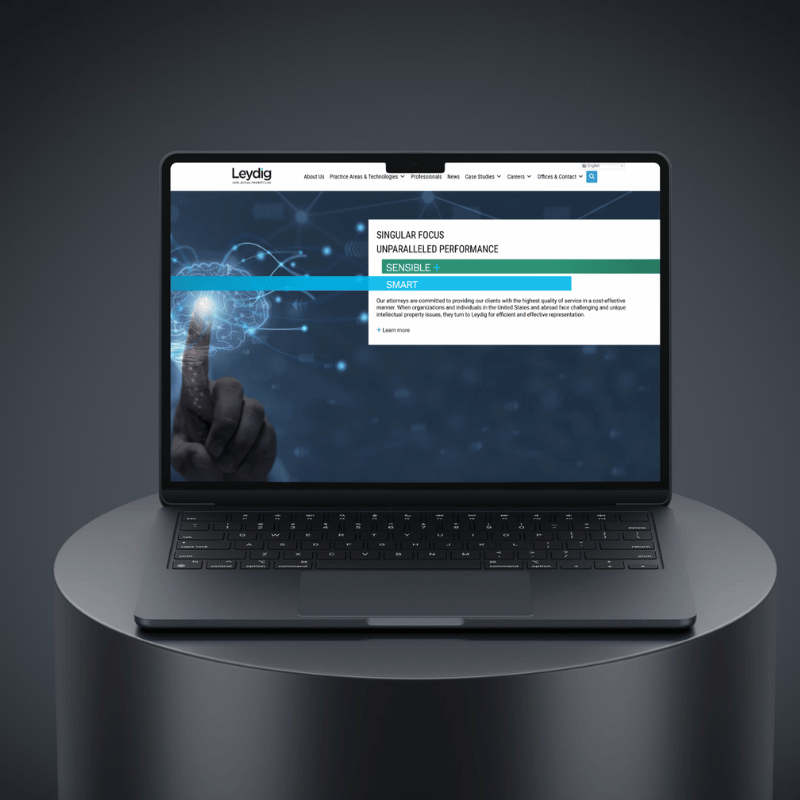
We reorganized the site to connect Leydig’s publications with the relevant practice areas and attorneys.
We subcategorized publications by practice area and configured each practice page to pull in relevant posts automatically. When Leydig publishes and tags an article, it appears on the relevant practice page without requiring the firm to update the page separately.
We also turned the general news section into a filterable Insights hub, where visitors can search by keyword and filter content by practice area and content type, including events, news, newsletters and publications.
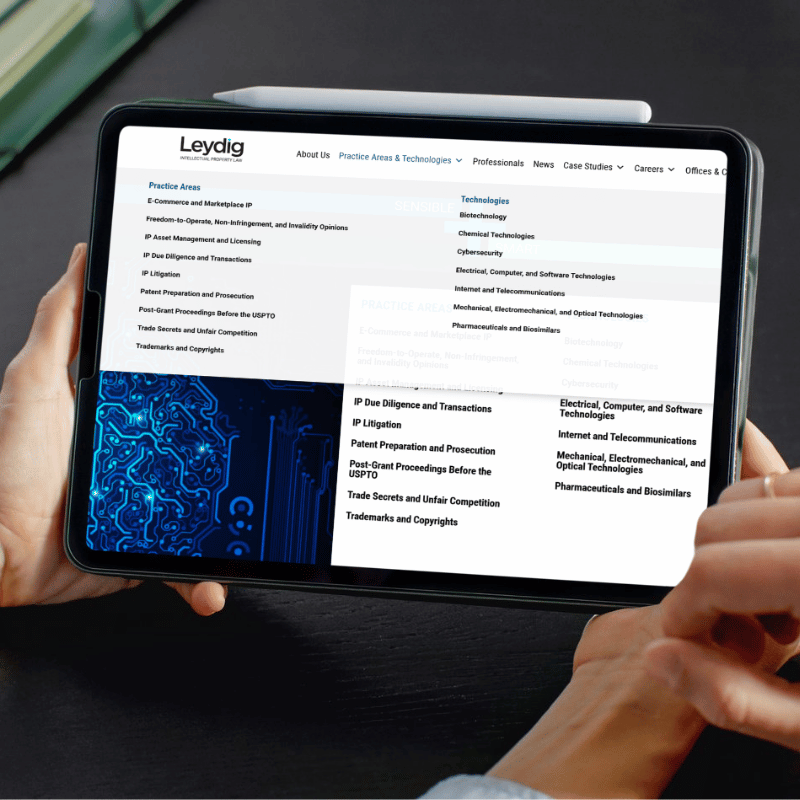
A new mega menu gives visitors a view of practices, professionals and case studies before they click. We also expanded site search to include information within attorney bios, so someone searching for a particular technology can find the attorneys who work with it as well as pages that mention it.
We recommended replacing flipping tiles with static cards that keep titles and descriptions visible. Leydig adopted that approach on its Careers page, where law students, laterals, patent agents, professional staff and professional development opportunities each have their own card.
Throughout the project, Leydig continued publishing content and updating attorney bios on the live site. We rebuilt the site’s design and functionality separately, then deployed those changes without overwriting the firm’s live content. Leydig didn’t need to pause publishing or recreate work when the updates launched.
Results
1.
Practice pages put relevant expertise where visitors need it.
Relevant commentary appears automatically alongside each practice area. Visitors who research a service can see the attorneys who work in that area and the insights they’ve published about it.
2.
Visitors have more ways to find useful content.
Static cards, a filterable Insights hub, expanded search and a mega menu give visitors direct paths to practices, professionals and thought leadership without requiring multiple clicks to discover what’s available.
3.
Publishing continued throughout the overhaul.
Leydig continued publishing articles and updating attorney information while we rebuilt parts of the site. The development process preserved the firm’s live content, so Leydig didn’t need a content freeze or have to recreate updates after the work launched.